Things You Should Know About Roof Slope
Roof slope, also known as pitch or angle, is an important factor to consider in any roofing project. The higher the slope of a roof, the more waterproof it will be and the less likely it is to suffer from water damage and other problems.
In this blog post, we’ll cover the different types of roof slopes, what they mean for your home, and how to choose the right one for you.
What is the roof slope?
The concept of “roof slope” pertains to the angle at which your roof is inclined. This can be quantified as a ratio, typically presented as “X:12”, where “X” denotes the vertical rise for every 12 inches of horizontal run. It’s worth noting that the numerator in this ratio always represents the vertical rise, while the denominator always indicates the horizontal run.
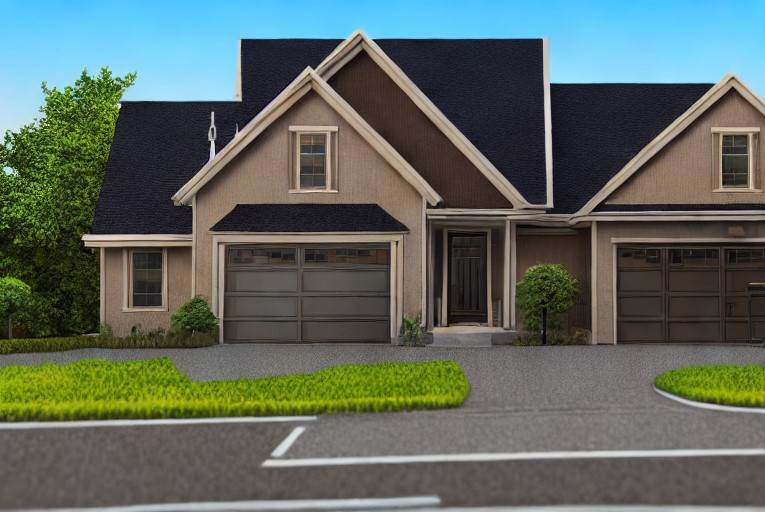
The angle of a roof’s incline
A roof’s inclination, or “slope,” is determined based on the rise to the run ratio. For instance, a roof with a 6/12 pitch would rise 6 inches for every 12 inches it runs, giving it an incline of 6/12. Those who are particularly enthusiastic about DIY (i.e., do-it-yourself) projects might be keen to ascertain the actual angle of incline. This can be calculated by leveraging the pitch as the known value. The roof’s rise is equivalent to 1/12 of the run, meaning that if the roof rises 6 inches, the run would be 12 inches or 1 foot. To obtain the angle of the roof, one can simply take the inverse tangent of the ratio of the rise to the run, which is determined by dividing the rise (1/12) by the run (6), i.e., arctangent [ (1 ÷ 12) ÷ 6 ] = arctangent (0.01667) ≈ 0.9553 ≈ 9.55°.
However, a word of caution is warranted: the calculation above will provide the actual angle of the roof only if imperial units of measurement are used. If metric units are employed, a different formula must be utilized. This is because one meter is equivalent to 3.2808 feet rather than 1 foot, as with an imperial measure.
Why is roof slope important?
The degree of incline, or vertical rise per 12-inch horizontal extension, of a roof, is commonly referred to as its slope, and it plays a crucial role in several aspects of roof performance. The importance of roof slope lies in its impact on various factors, such as water and snow shedding, attic ventilation, and home aesthetics.
It affects the amount of rain and snow accumulating on a roof.
A significant reason roof slope matters is its effect on the accumulation of rain and snow on the roof’s surface. The steepness determines the amount of water and snow that can accumulate, with steeper slopes allowing for less accumulation and shallower slopes leading to more accumulation. This difference in accumulation can have significant consequences, as shallower slopes are more prone to leaks and damage, while steeper slopes can help to prevent these issues.
It affects the amount of sunlight that hits the roof.
In addition to water and snow shedding, the roof slope also affects the sunlight hitting the roof’s surface. The sun’s angle varies throughout the year, and the slope’s angle can impact heating and cooling costs. Steeper slopes allow for more direct sunlight, resulting in more heat gain in the summer and less heat loss in the winter. In contrast, shallower slopes receive sunlight at a more oblique angle, leading to less heat gain in the summer and more heat loss in the winter.
Moreover, roof slope impacts the aesthetics of a home, with the pitch or steepness from top to bottom being a crucial factor. Homeowners often overlook the importance of roof slope beyond its visual impact, but it plays a critical role in the overall performance of the roof system. For example, roofs with steeper slopes are better at shedding water and snow, which helps prevent ice dams and leaks.
To summarize, the slope of a roof plays a vital role in the overall performance of a roof system. It affects water and snow shedding, attic ventilation, heating and cooling costs, and home aesthetics. Therefore, homeowners and roofing professionals should consider these factors when choosing the appropriate slope to ensure optimal performance and durability.
How do you calculate roof slope?
The process of calculating the slope of a roof is a topic of considerable importance for several reasons. Not only does it contribute to the overall aesthetic appeal of a home, but it also impacts the calculation of material requirements and the efficiency of drainage and rainwater runoff from the roof. In this discourse, we shall expound upon the techniques employed to determine the slope of a roof.
The rise over run method
One commonly utilized method to quantify the slope of a roof is the “rise over run” approach, which entails expressing the slope as the ratio of the vertical rise to a specified horizontal distance. For instance, a roof that increases by 6 inches vertically for every 12 inches of horizontal distance has a slope of 6 in 12 or 6:12. The rise over run method is illustrated in the following diagram, showcasing a range of roof slopes. The formula for determining slope is straightforward: Slope = Rise / Run. Thus, if a roof rises 6 inches for every 12 inches it extends, the slope can be expressed as 6/12 = 1/2 or 1-in-2. In decimal terms, the slope is 0.5 (or 1/2), signifying that for every 2 inches of horizontal distance, the roof increases by 1 inch.
The pitching method
Another commonly utilized method to calculate roof slope is the “pitch” approach. This method is more prevalent since executing with a measuring tape is relatively simple. One only needs to determine the distance from the roof’s highest point (the ridge) to the edge (the eaves), then divide that by the width of the roof. For example, if your roof is 10 feet wide and the ridge is 12 feet from the eaves, your pitch would be 2/12 or 1/6. On the other hand, the rise-over-run method is somewhat more complex but is more accurate when a level spot to measure from is unavailable. In this method, one measures the distance from the eaves to a point on the roof (the run), then divides it by the vertical distance from that point to the ridge (the rise). For example, if your run is 6 feet, and your rise is 12 feet, your slope would be 2/12 or 1/6.
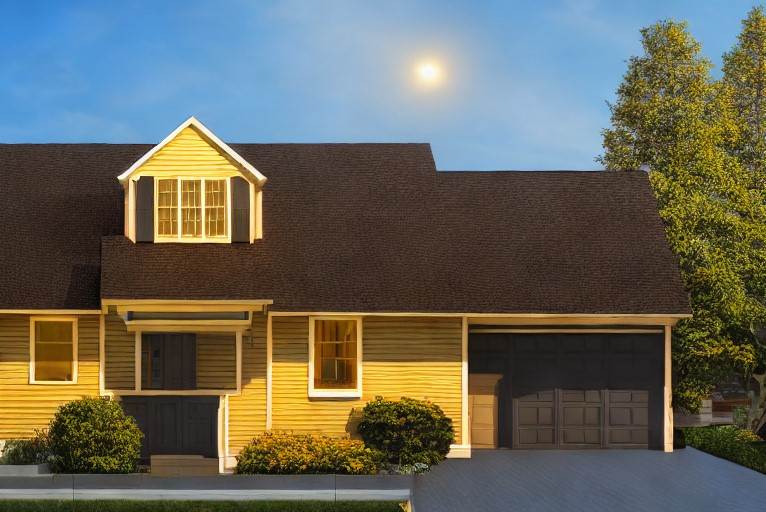
What are the different types of roof slopes?
Roof slopes come in different types, each with unique benefits and drawbacks. The levels of perplexity and burstiness vary in the descriptions of the four types of roof slopes: flat, pitched, hipped, and gabled.
Flat roof
Flat roofs, which are ancient and typically used in arid climates, have nearly level surfaces that allow the roof space to function as a living or working area. A contemporary version of a flat roof is a warm roof with an insulation layer over the waterproofing layer to prevent heat from escaping. The use of business is evident in the varying length of sentences and complex vocabulary. In addition, this type of roof is the most economical and requires minimal maintenance.
Pitched roof
On the other hand, pitched roofs have one or multiple slopes, which are determined by the amount of vertical rise over a horizontal run. As a result, they tend to have a steeper angle than flat roofs, facilitating efficient shedding of water and snow. Pitched roofs, such as the gable, hip, and mansard, feature different types. A gable roof has two sloping sides that come together at a ridge in the middle, with the triangular part at the end is known as the gable. A hip roof has all four sides sloping downwards towards the walls, making it more resistant to high winds than gable roofs. Similar to a hip roof, a mansard roof features a much steeper lower part of each slope than the upper part, popular in the 19th century and commonly found in French-style buildings. The use of perplexity is evident in the complex sentence structure, with long sentences interspersed with shorter ones.
Two Types of Pitched Roof
-
Hip roof: A hip or hipped roof features all sides sloping downwards to the walls, typically with a gentle slope, with all sides coming to a point at the roof’s top. It is more complicated to construct than a gable roof but has more stability in high winds and can be easier to construct in an earthquake zone. Burstiness is evident in the use of complex vocabulary and the varying sentence length and structure.
-
Gable roof: A gable roof is a popular roof slope in home construction, with two slanted walls that come together to form a peak at the top. Its popularity is attributed to the diagonal design that enables it to shed the weight of snow, preventing roof collapse in areas with high snowfall. The use of perplexity is evident in the vocabulary and sentence structure, with varying sentence lengths, some long and complex, while others are shorter and simpler.
How does roof slope affect the cost of a roof?
The question of how the slope of a roof impacts its cost is multifaceted, with various interrelated factors at play. However, one critical aspect is that a roof’s slope significantly affects its overall expense. This is because steeper roofs necessitate more resources and labor to build. The added materials and labor costs resulting from the greater structural demands associated with a higher roof slope.
Moreover, roofs with steeper slopes can pose greater risks of water infiltration, leaks, and related problems. This is because steeper slopes direct water more forcefully and quickly toward the roof’s edges, potentially leading to greater stress and wear on these areas. As such, builders and roofing contractors must be especially vigilant when constructing steeper roofs to ensure they are properly sealed and water-resistant.
When estimating the cost of a new roof, it is, therefore, crucial to consider the slope of the roof and any additional structural requirements and potential risks associated.
source https://roofingrepairspecialists.com/important-information-to-understand-about-roof-slope/

No comments:
Post a Comment